
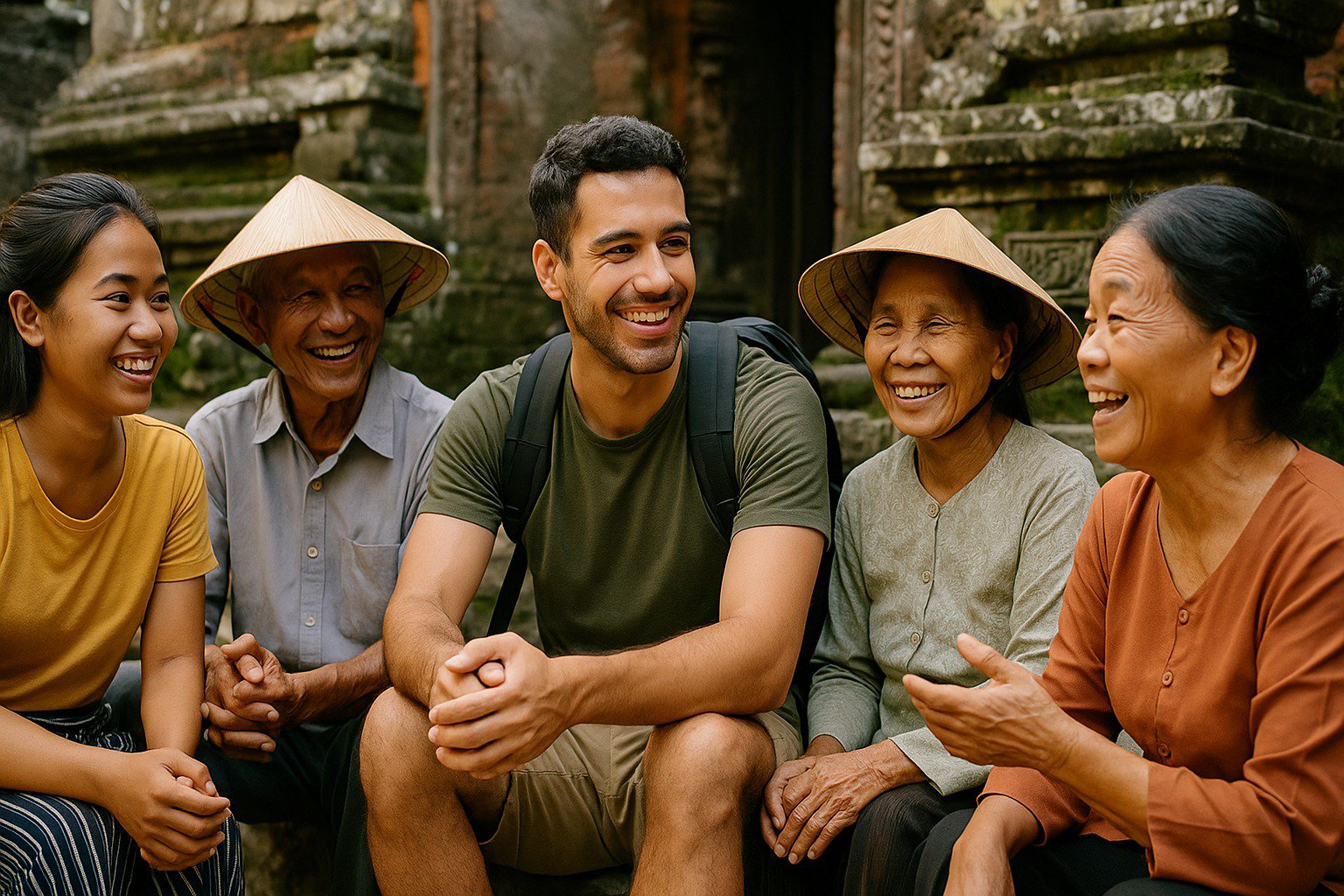
Make Friends While Traveling: Relate (The 5th R of Responsible Travel)
Of the 7 Rs of responsible travel, the fifth one is my favorite: Relate. Relating is all about connecting with new people in the places you visit. Make friends while traveling. While it may be relatively easy to make friends with other people in your tour group, or even fellow travelers you meet from other countries, it can be especially rewarding to make connections with the people from your host country. It’s important to gain a deeper understanding of the place you’re visiting, and I believe the rewards are many, both for the traveler and for the host community.
Whether you’re solo traveling (which in some ways makes it easier to meet local people) or have a traveling companion, there are many ways to meet interesting people from your host country. You just have to seek them out.
Make friends while traveling (with people who differ from you).
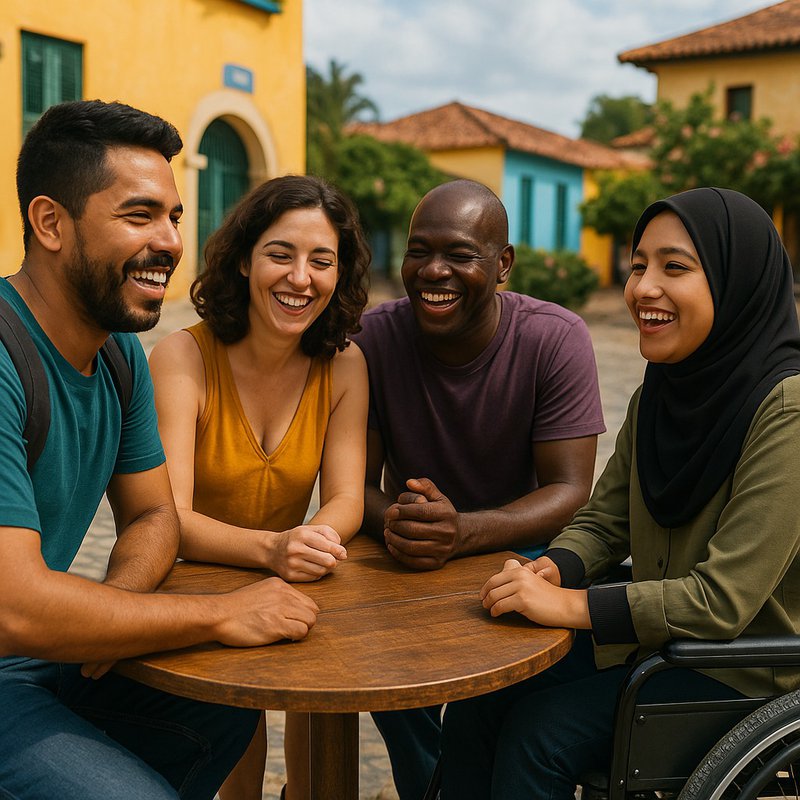
Actually, you don’t even need to be traveling for this one. Whether you’re in your home country or traveling abroad, try to befriend people who may be from a different country, speak a different language, be a different race, have different religious or political views, or have some other perspective on life due to their circumstances. Instead of focusing on differences, look for common ground with these people.
Now more than ever, in a time of increased political violence, the world needs people who can see others as fellow human beings and recognize the goodness in people even if we feel they are very different from us.
Those of us who are travelers and immigrants to other countries have golden opportunities for this as we interact with the people in our host countries, and it is vitally important that we do so. Why?
The Research
Not only does connection with people of other countries and cultures expand our own personal horizons and enrich our own lives, but it can actually contribute to world peace.
I’m a skeptic, so when I hear claims like, “Connections with people of other countries can contribute to world peace,” I want to see some actual evidence to back them up. Well…it exists.
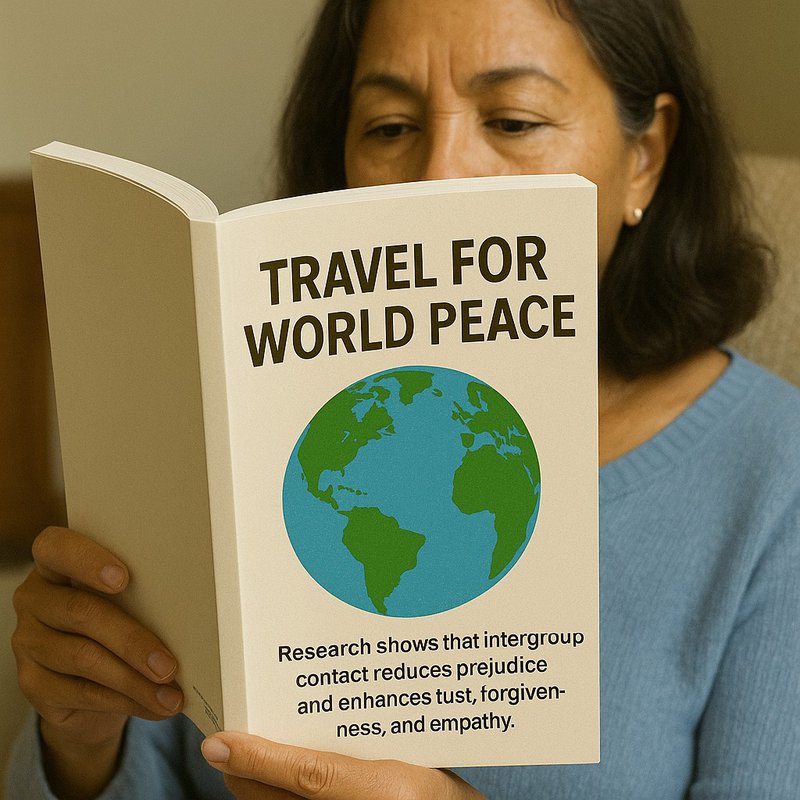
Travel for World Peace
Most people have a tendency to gravitate toward the comfortable and familiar: People who look, sound, and/or act most like themselves. It’s human nature. It’s comfortable. It feels safe.
In a meta-analysis of 515 studies and over 250,000 subjects, researchers found that Intergroup separation “guarantees smoldering resentment and eventual conflict.” Grouping up with people who are like you and never reaching out and mingling with the locals will eventually create an “us vs. them” feeling of resentment.
However, this same meta analysis found that Intergroup contact typically reduces prejudice and anxiety and enhances trust, forgiveness, and empathy!
The Catch
But there’s a catch. Mere contact is not enough. Just a smile or small talk between you and the person who you bought bananas from or who cleaned your room—what I call transactional relationships—is nice, but isn’t really enough to move the needle. I encourage people to go a step further and actually make friends while traveling.
An article in the journal, American Psychologist explains the type of contact that is truly beneficial.
It says that “contact conducive to enhancing intergroup perceptions and relations should exhibit certain characteristics—that is, cooperative, equal-status contact of an intimate nature aimed at meaningful, mutually beneficial goals.”
In fact, when we don’t try to connect with or understand the people and cultures where we live and travel, particularly those of us from wealthier countries traveling to poorer countries… We may inadvertently continue to perpetuate patterns of exploitation, inequality, and paternalism, without even realizing it or meaning to.
But as you can imagine, these power dynamics can actually create more resentment and misunderstanding between cultures.
So how do we actually incorporate this beneficial type of contact into our lives as travelers, digital nomads, or immigrants?
This goes beyond those transactional relationships. I’m going to break down this statement and share a few real-world tips I’ve learned over the years, that have actually helped me make friends while traveling.
The first part of the phrase says to:
Seek “cooperative, equal-status contact…”
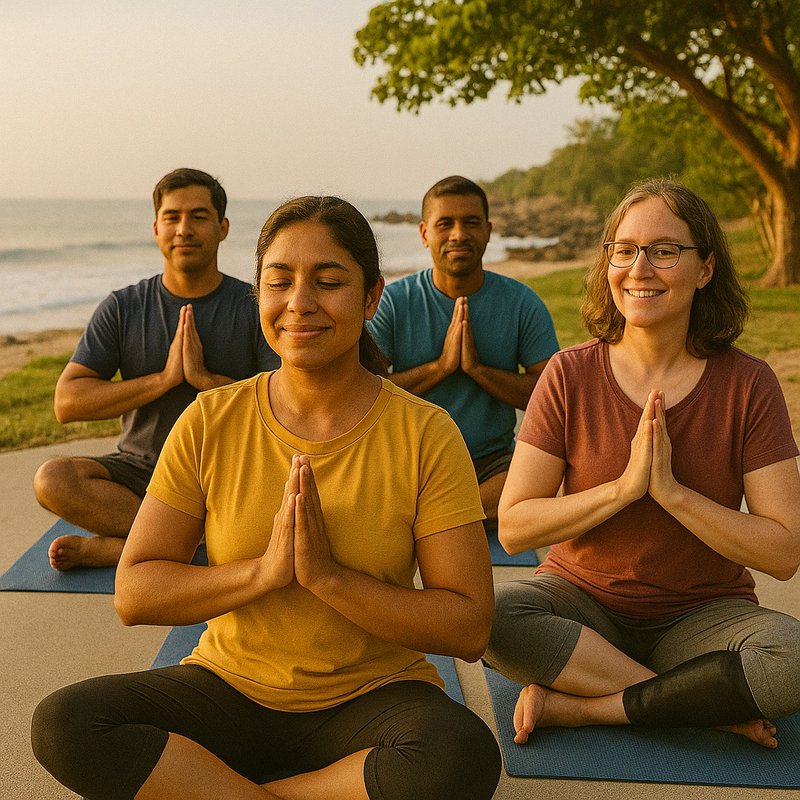
Seek out opportunities where you can participate in activities with the people in your adopted community as one of them—on the same level.
Here are a few practical ideas from the real world…
Language exchange
If you don’t speak the local language, find locals interested in learning a language you speak. This is a relatively easy thing for those of us who speak English. It was huge for my mom, my sister and I when we arrived in Mexico. My mom was struggling to learn Spanish, but lots of Mexicans were also very interested in learning English, so they helped each other out, formally and informally. Even if you’re just in an area for a few days, doing a bit of language sharing with interested locals is a great way to make friends while traveling.
In Chiang Mai, we actually found an organized language exchange meetup where people from all over the world met up with each other and with locals and had conversations in various languages.
Classes
Classes are also great, where you’re doing and learning things together. I’m not talking about classes organized specifically for travelers or foreigners, but classes the locals themselves are taking, like exercise classes. That’s how I met Socorro, who is now a dear friend…at a yoga class in my neighborhood gym in Mexico. I was the only foreigner in the class, and Soco came to me to see if I would help her practice her English.
If there’s a language barrier, things like crafts, music, and physical activities can be great because there is less reliance on language.
Whether it’s a one-off class like a craft workshop, a daily exercise class, or something more long-term if you are a digital nomad or otherwise spending a long time in the area, classes connect you with other people with similar interests and provide opportunities to make friends while traveling. Each time you join a local class instead of a tourist tour, you help normalize equality between travelers and hosts.
Activities
Playing sports, playing games, singing or playing instruments together, going hiking or dancing, making art… these are all genuine interaction on an equal level and a wonderful way to make friends while traveling…and while at home, too! You aren’t being served, waited on, sold to, or entertained by the locals. You’re engaging in equal-status activities together, enjoying each other’s company.
Next time you join an activity, are you participating with locals or being served by them?
The next part of the phrase about effective intergroup contact is:
“…of an intimate nature”
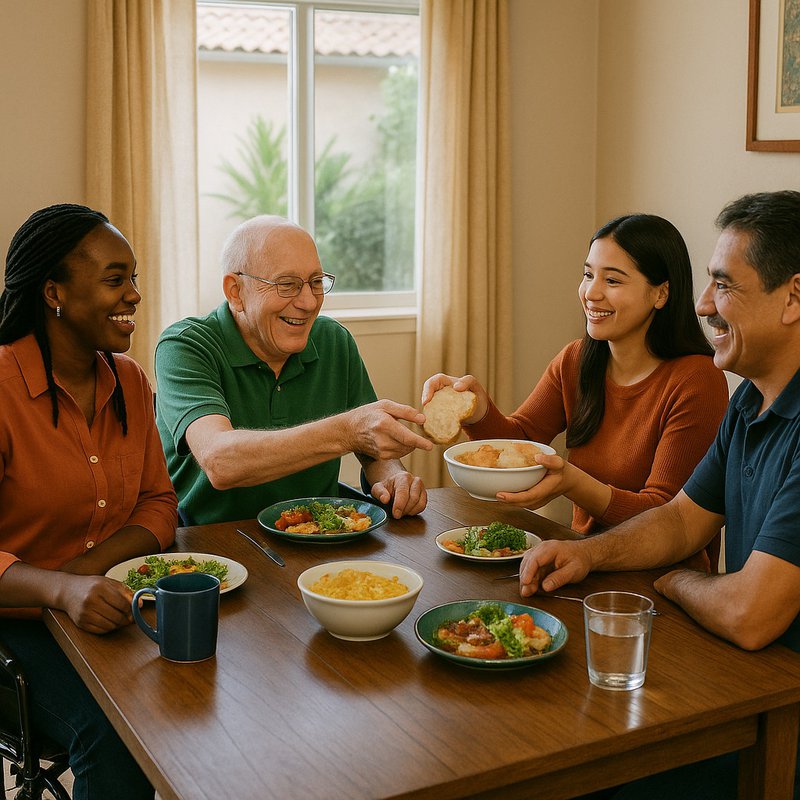
One of the more intimate things we can do is get together in people’s homes, and share meals and spaces together.
Invite people over
If you’re in a place long enough to get to know people there, at the gym or in a class or local club, invite someone who seems nice to your house/Airbnb for a meal or coffee! Or if you’re in a place that isn’t suitable for inviting guests, consider inviting them to join you for a meal or coffee at a nearby restaurant. In Ecuador, we befriended a couple of ladies in our exercise class and invited them over for breakfast. When we move beyond small talk and share meals, we’re not just making friends — we’re softening borders.
Accept invitations
Whether or not you take the first step, if you’re friendly and approachable, you might receive some invitations from locals. Both of the ladies we invited to our place in Ecuador then invited us to their homes, too, and we got to meet their families. Accept the invitations—it’s a no-brainer way to make friends while traveling!
Seek out homestays
If you’re fast traveling and don’t have a chance to get to know people as well, look into homestays, where you actually stay with a local host family and participate in daily life with them. My roommate, Dayvee and I did this for a night on a 10-day trip to Guatemala with the RISE Travel Institute in 2022. It was a lovely opportunity to spend time with people in our host country well outside of the tourist bubble. Keith and I had another homestay experience years earlier in Saraguro, Ecuador, made friends with them, and returned a few years later for another stay. I highly recommend homestay experiences, or stays with locals through programs like Couchsurfing, to make friends while traveling.
Think about the last time you shared a meal with someone from another culture. What did you learn about them — and yourself?
If that hasn’t happened yet, who could you invite (or say yes to) next time?
And the last little part of that phrase on intergroup contact…
“…aimed at meaningful, mutually beneficial goals.”
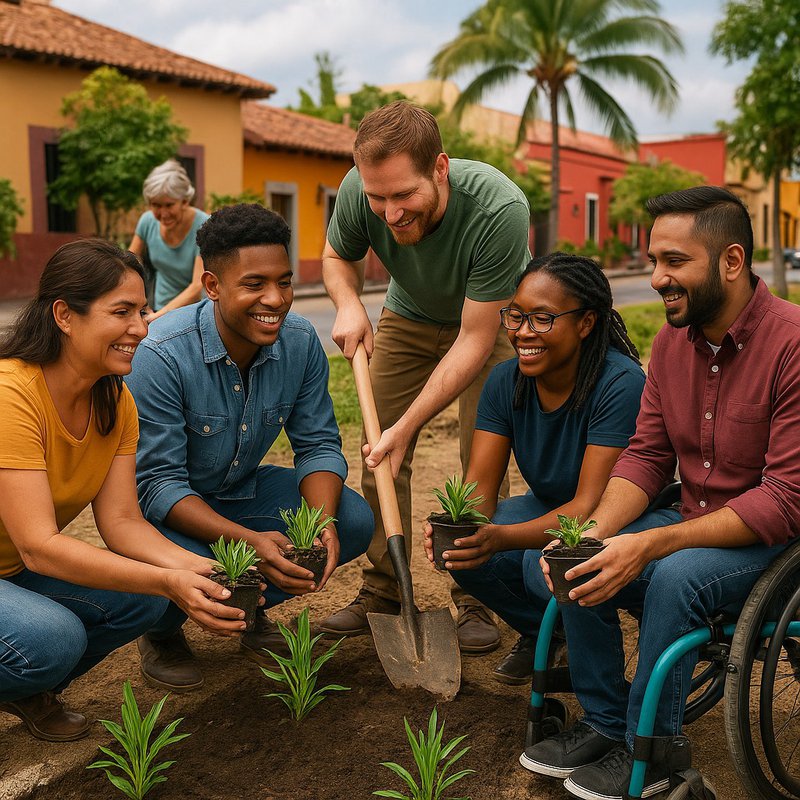
What are some mutually beneficial goals for guests and host countries?
Work Toward a Common Purpose.
I sing in a multicultural choir in Mexico, made up of a mix of Mexicans, Americans and a couple of folks from other countries. We are all there working on a common goal together: to create beautiful music for the community. We help each other out with the pronunciation and translation of the songs in English and Spanish. It’s beautiful.
If you’re fast traveling and can’t be part of a longer-term activity such as a choir, see what other community-led initiatives you might be able to get involved in for a day or two. Nobody knows the needs or the solutions to local problems better than the community members themselves. Follow their leadership, and support them in making your host community a better place for all.
You might not be able to stay long enough to develop deeper friendships, but you can share a purpose with them. A few ideas:
- Community gardens and urban agriculture projects
- Community mural or art projects
- Environmental cleanups or reforestation days
- Food exchange workshops (locals share recipes, travelers share their own)
- Skill-sharing or micro-workshops
- Participatory cultural or religious festivals – if explicitly welcomed
- Citizen science/environmental monitoring (bird counts, reef health, etc)
The important thing is that the interaction should feel cooperative and respectful rather than transactional. A word of caution: Do your due diligence with volunteer programs. Unfortunately, some volunteer programs can actually cause more harm than good.
Mutual Understanding. Share. Learn. Ask.
In addition to learning from your hosts, share something meaningful to you or from your home region. The people in the places you visit may not have traveled to your part of the world, or to some of the areas where you have traveled, so consider ways you can bring your little piece of the world to them. Share with each other. Learn from each other. Ask each other questions.
As an example, when Keith and I have stayed with hosts in their homes, in addition to asking them about their lives and learning from them, we sometimes share an experience that might be new for them, such as a basic swing dance class or a little presentation about what it is like to live and work in Antarctica.
In your next destination — or your own hometown — what’s one small project or event where you could contribute with the community, not for it?
What shared purpose could you pursue that helps everyone involved?
What Not to Do
As you travel and interact with the people in your host country, it’s important to keep in mind a few friendship faux pas you’ll want to avoid, such as:
- Treating locals as cultural trophies or photo props. Locals aren’t props for your Instagram or “authentic experience.” Friendship means reciprocity, not display.
- Assuming friendliness = consent or comfort. A smile isn’t an open door to personal questions, photos, or invitations. Ask first. Respect “no.”
- Overhelping (paternalism disguised as kindness). You might mean well by “helping,” but unsolicited help can cross lines or reinforce power dynamics. Follow local leadership instead.
- Ghosting after connection (no follow-up or appreciation). Real friendships need nurturing. Message. Call. Check in. Even a short note months later says, “You mattered.”
- Skipping the self-check. Ask yourself, “Am I here to learn and connect — or to feel good about myself?” The difference defines whether your presence uplifts or overshadows.
Basically, try to think about how YOU would feel if it seemed people were trying to be friends with you simply to show you off, to make themselves feel better about themselves, because they pity you, or because you are some novel new toy that they will just forget about after a few days. That feels icky, right?
Remember the golden rule. Remember we are all humans with feelings and deserving of dignity and respect.
Why to Make Friends While Traveling—And How to Start Now
Research shows that the benefit of international friendships in creating peace extends in a ripple effect beyond the two people who become friends.
“Friendship as a social practice ‘normalises’ behaviour, attitudes and gestures and helps to construct a positive culture of positive peace.”
Each friendship made across difference is a small ripple. Alone it’s gentle, but together these ripples become waves that smooth the edges of the world.
If enough of us become mindful in our interactions with people who we perceive are different from us, we CAN help to create more peace and less resentment and division in the world.
I believe that as we make friends while traveling, we care more about people in other places as real human beings. If we’ve made a friend with someone from a particular country, we’re less likely to stereotype the people from that country. We’re more likely to care about their environment. We’re less likely to want to engage in conflict with them. In short, by being willing to step outside our comfort zones and make friends with people who are different from ourselves, we help promote world peace.
Start Now
You don’t need to wait for your next trip to start developing the habit of making friends who are different from you. Even if you only have 10 minutes, you can get started today. Here are a few ideas for how to do that:
- Message a local acquaintance or neighbor from another culture.
- Sign up for a language exchange event in your city.
- Look for a community project in your next travel destination.
It’s not easy, but we can learn to sit through the discomfort and do it anyway. It’s worth it. How will you strive to make a new friend who is different from you, whether in your hometown or next time you travel?
How might your life look different if you intentionally built friendships with people who challenge your assumptions?
Whose story could expand your world — and who might need to hear yours?
Before your next trip — or your next walk through your own neighborhood — ask yourself: Who might become my next ripple?
Enter your name and email to receive my newsletter and stay up to date!
We hate spam as much as you. Your email is safe with us.