
Exploring Zamora, Ecuador (and getting my unwanted souvenir)
 Wednesday morning, Feb. 12, we took the city bus to the bus station and bought tickets to Zamora for $2.50 each. No matter which direction you go from Loja, there is a steep climb out of the valley and usually a long descent on the other side, all on winding roads. This road drops into Amazonía–the edge of the Amazon Basin. We had various vendors on this bus–some boarded while we waited at the station and others joined us en route–selling everything from candy to jewelry to “cures” for various ailments.
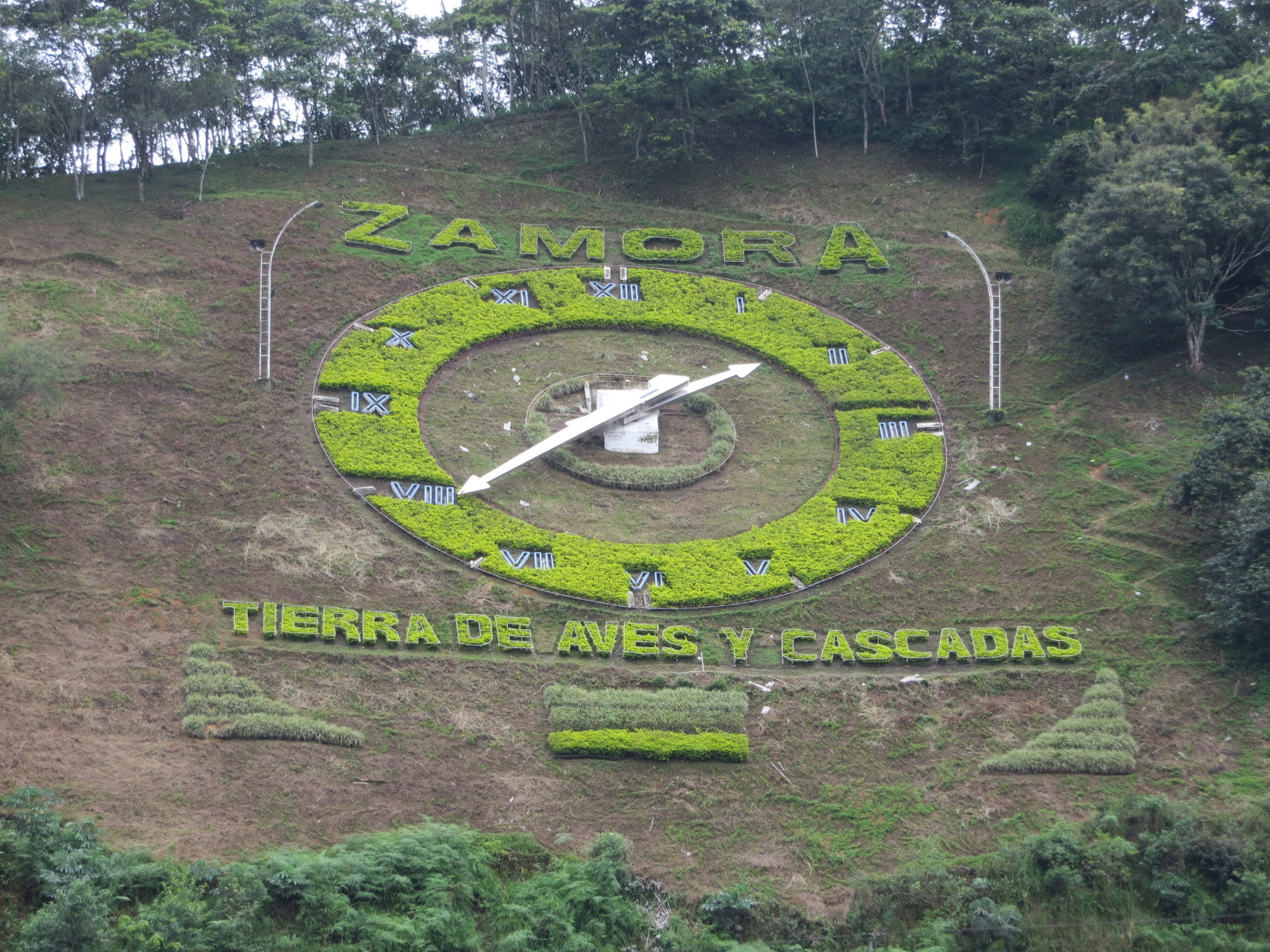
In Zamora we looked around for a hotel and settled with Hotel Betania, for $25 per night. It’s a clean and comfortable hotel with hot showers and the best rooftop view of the town’s hillside attraction: a giant clock reported to be the largest in the world. For an additional $3 each, we also purchased a good breakfast on the rooftop terrace (note: if you go, be sure to request breakfast when you check in; they need to know ahead of time).
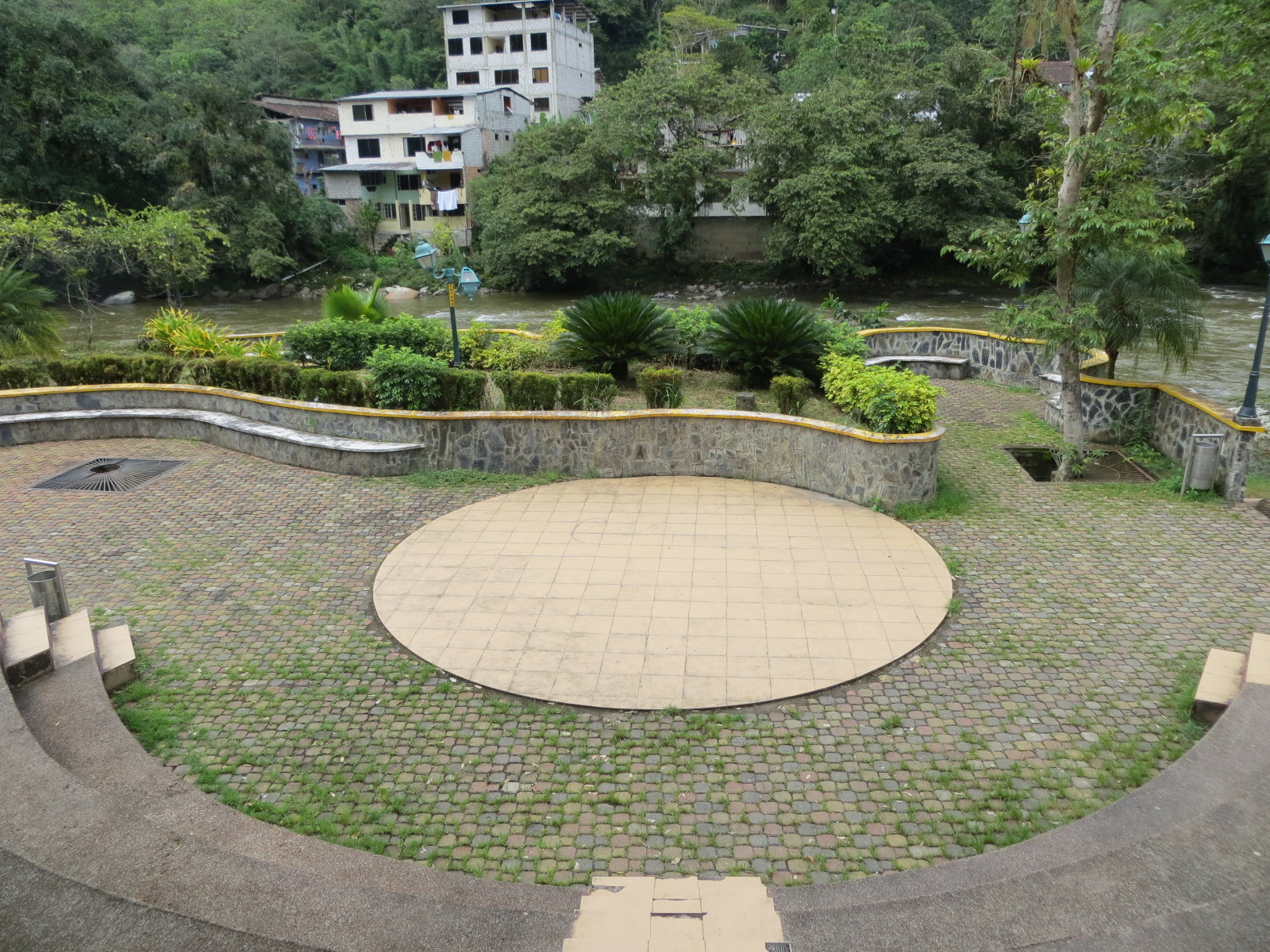 After dropping off our backpacks in the room, we set out to explore the town. Zamora sits at the confluence of the Zamora and Bombuscaro rivers. There are two main parks in town–one on each river. We walked the streets until we happened upon the first park, on the murky Zamora river. The landscaping is pretty nice, but the trash and graffiti here and there gave me an unwelcome feeling. As we strolled along we saw another expat couple peering into the trees with their binoculars and consulting a bird guide. We eavesdropped for a bit to detect which language they spoke. American English.
 We approached them and I asked them which guide they used for birdwatching, since I’d like to get a good one before coming back next time. They highly recommended “The Fieldbook of the Birds of Ecuador” by McMullan and Navarrete, so it’s on my list to buy for our next trip to Ecuador! Unfortunately it seems to be a little difficult to find, so I’m keeping close watch and will buy it as soon as it’s available. If I had an iPad I’d be very tempted to get the Birds of Ecuador app and the Hummingbirds of Ecuador app.
 Following the river downstream, we reached the confluence with the much cleaner Bombuscaro river and then walked up that river until we reached the other park.
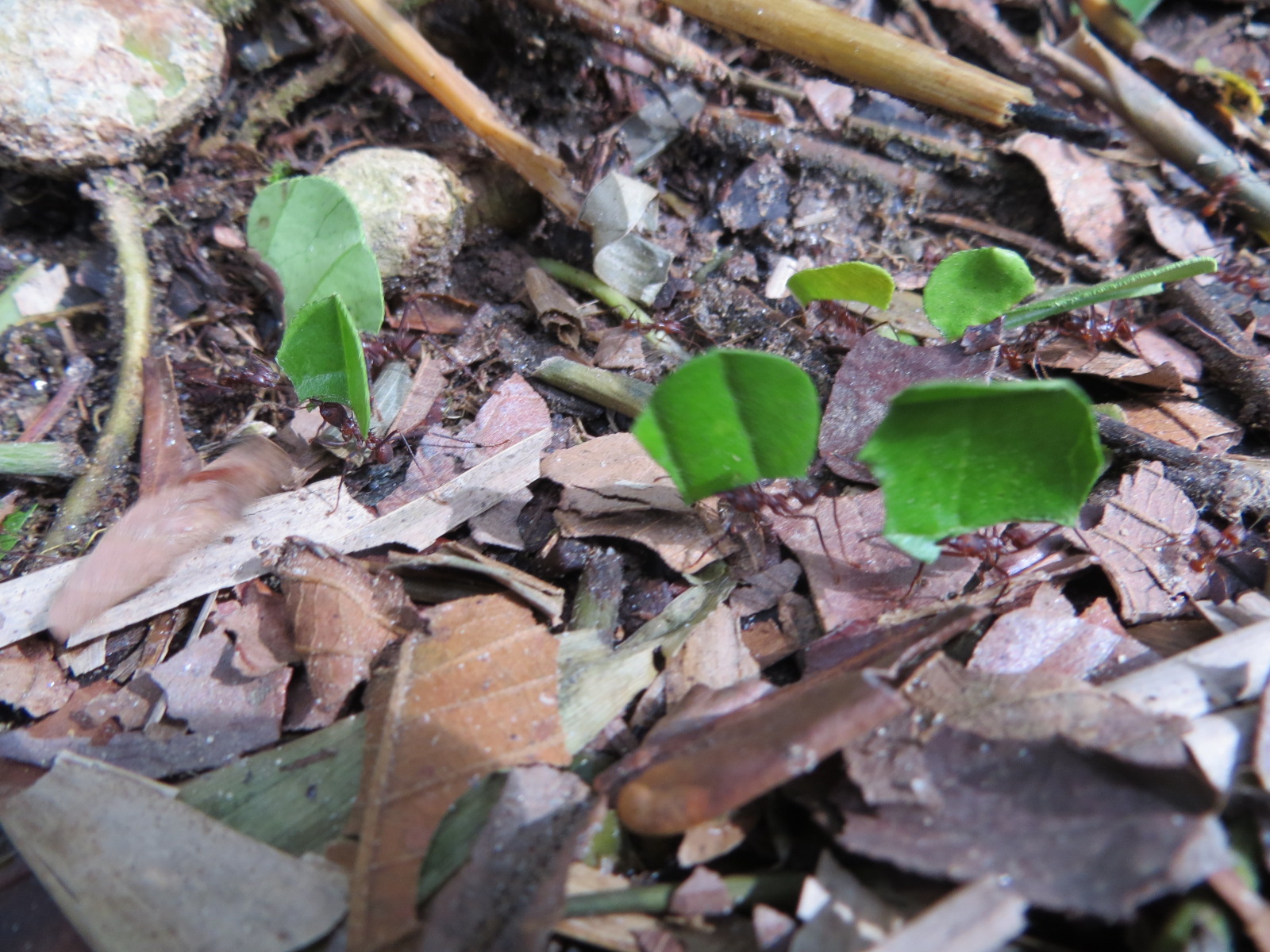
 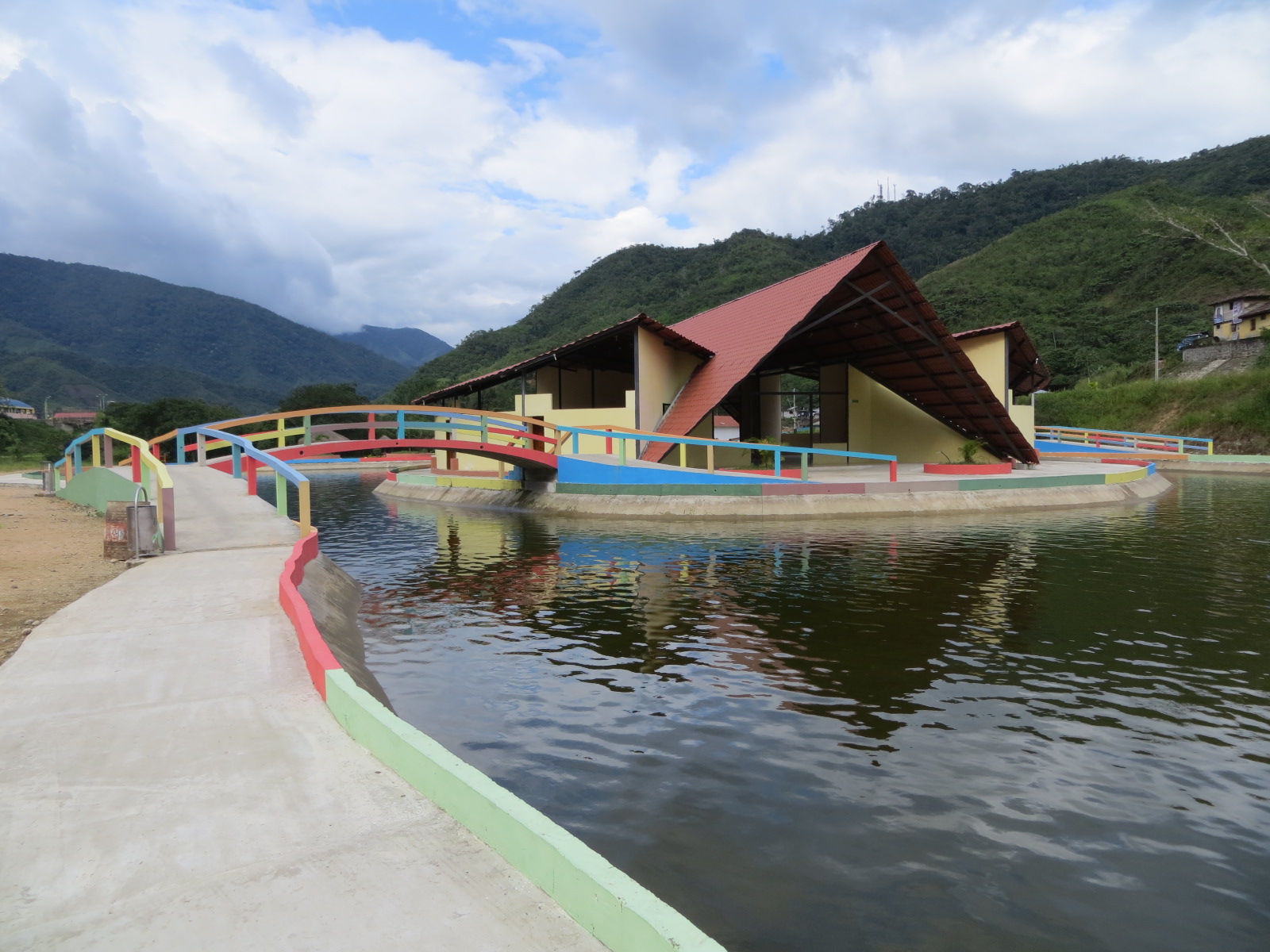 I spent some time following several long, fascinating trails of leaf cutter ants in what looked like an older area of the park, with lots of trees. Eventually we reached a section of the park which looks very new. There’s a great big pool for swimming, and funny animal slides which drop into the pool, and other playground toys off to the side. I get the impression that there are big plans for this park and when they finish all the construction and add a restaurant (for which the building has already been built), it will become a tourist draw for people coming to and from Podocarpus.
We walked back into town and sat in the plaza–its central fountain adorned with the statue of a parakeet–to people-watch for awhile.
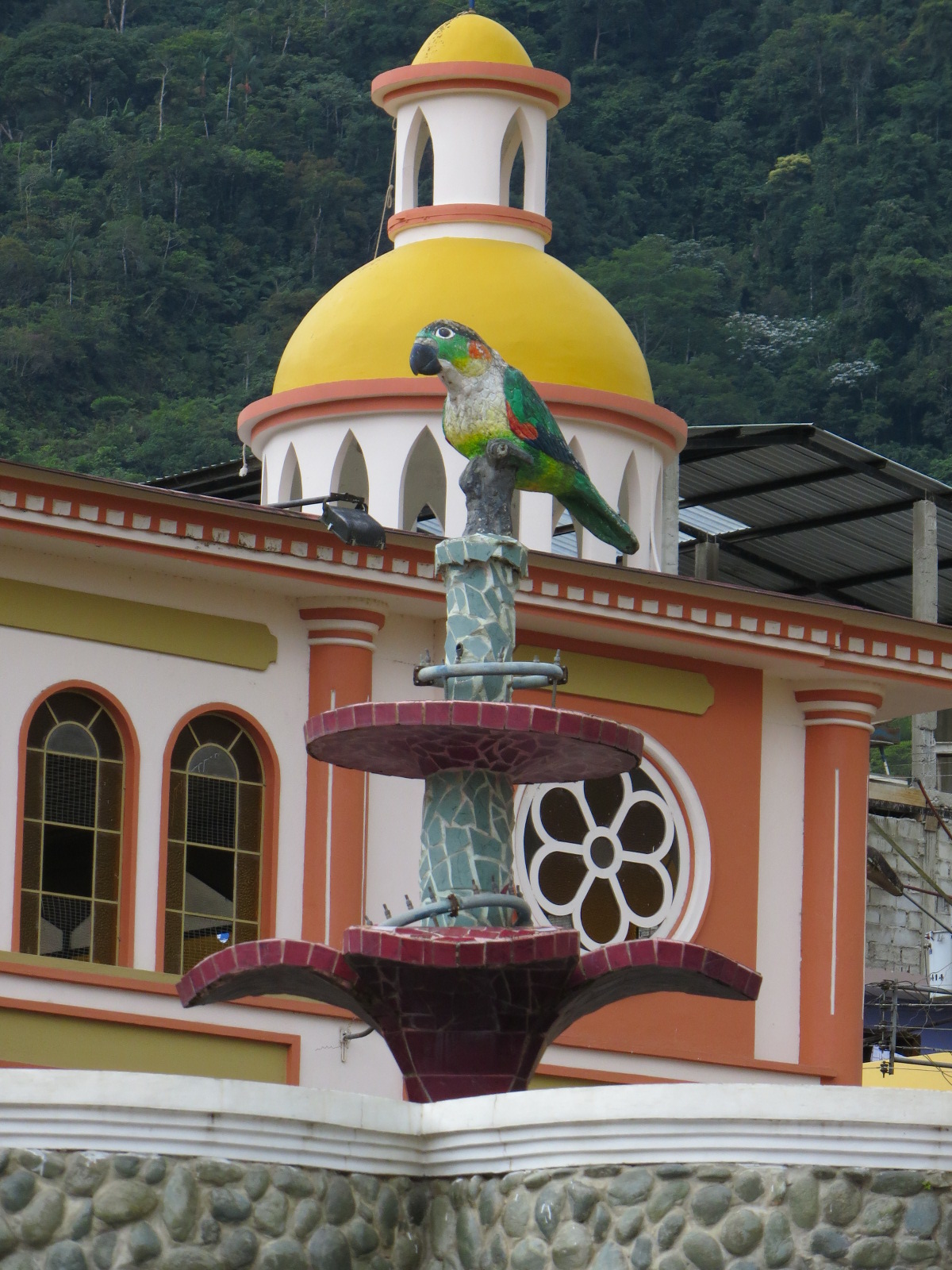 Something about the central square in every Latin American town draws the residents every evening. Some come for mass at the ever-present Catholic church. The kids will be dashing around on their wheeled toys and men and women will be laughing and visiting. A rainstorm drove us back to our dry hotel room, and after dark, we climbed back up to the rooftop terrace to see the giant clock all lit up with neon lights.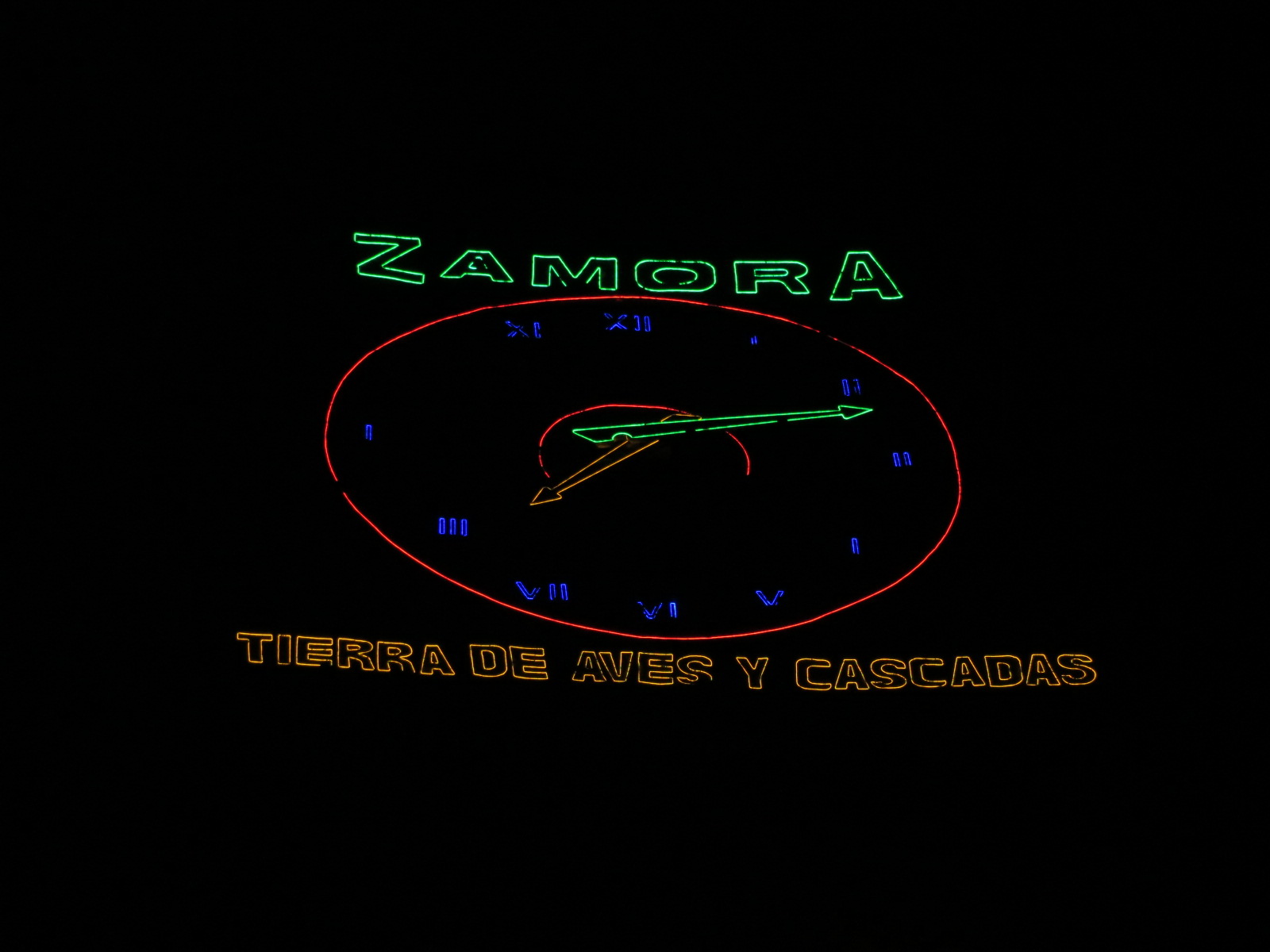
We returned to the terrace in the morning for a breakfast of fruit juice, coffee with milk, bread, and scrambled eggs.
At the mercado next to the bus station, we purchased some bananas, humitas (basically tamales), and empanadas for a picnic lunch ($3.25 total) and began our hike up the street toward Podocarpus, 6 km away. The dirt road leading to Podocarpus National Park follows the Bombuscaro river, on the opposite side from the park we had visited the previous afternoon. The scenery improves with each passing kilometer and the views of the river, the forest, and the many flowers, butterflies, and birds prompted us to pull out the camera often. We came across an old foot bridge spanning the river–still sturdy but definitely going into disrepair.
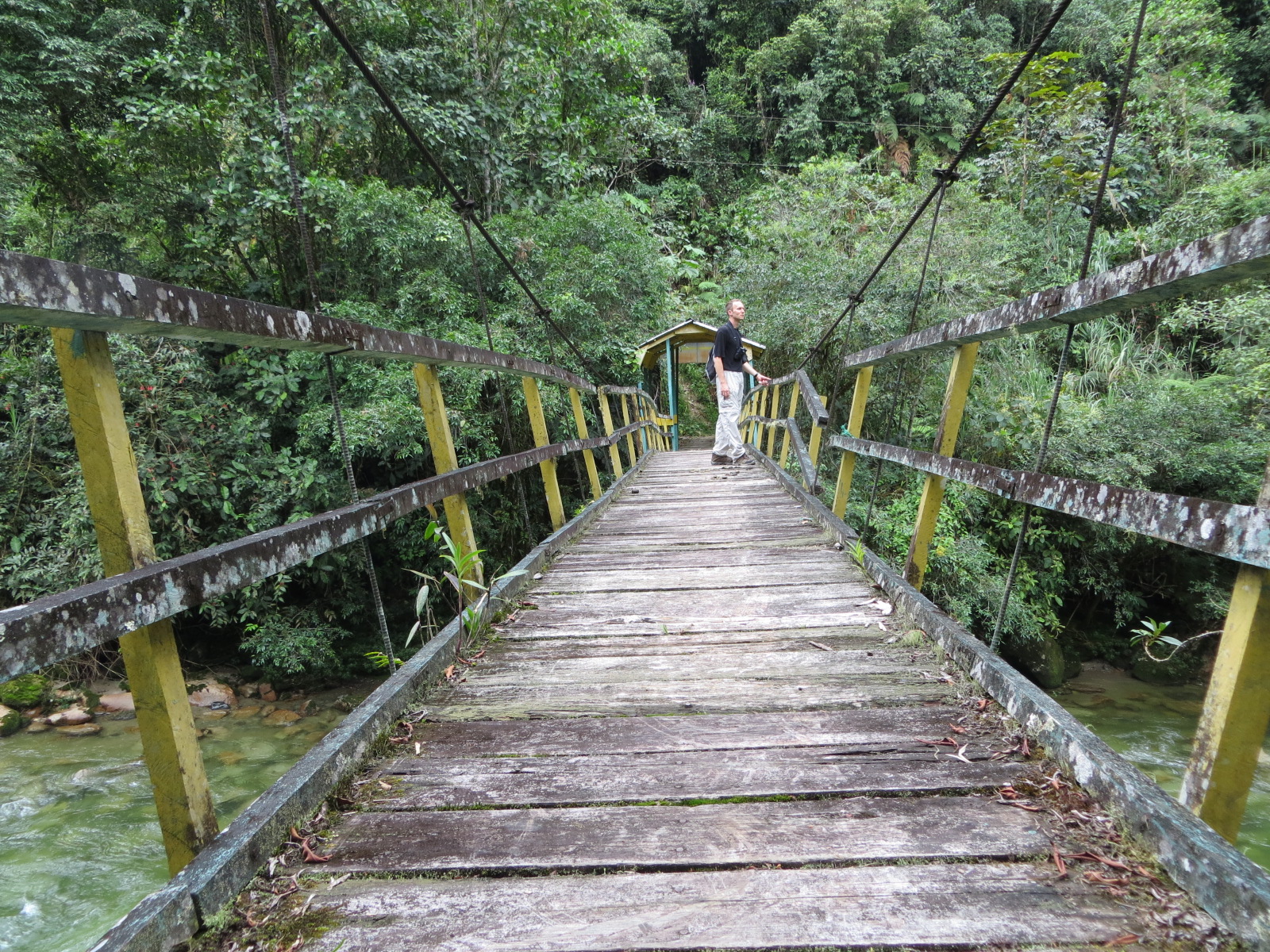
We crossed to the other side and saw that the trail led up into the forest. Tempting, but we came to see Podocarpus, so we returned and continued up the road.
Eventually the road ends in a parking lot and everyone must continue on foot (or dirtbike, as some had apparently done). At the welcome center we asked the ranger about the camping and lodging options we had read about in our guide book, but the camping area and cabins are unfinished and visitors are still obliged to lodge outside the park. Maybe next year! The price per person will be $3–the cabins will be equipped with beds and mattresses but lodgers must bring their own bedding.
After familiarizing ourselves with the map, we set out to tackle some trails and soon encountered another birdwatching couple–a pair of ladies from New Jersey. We chatted for awhile about Ecuador while they shared their mango with us, and then one of them offered to give us a ride into town in her rental car later on if we would give her a time to meet us at the trailhead. We happily accepted–it would give us more time to explore the park.
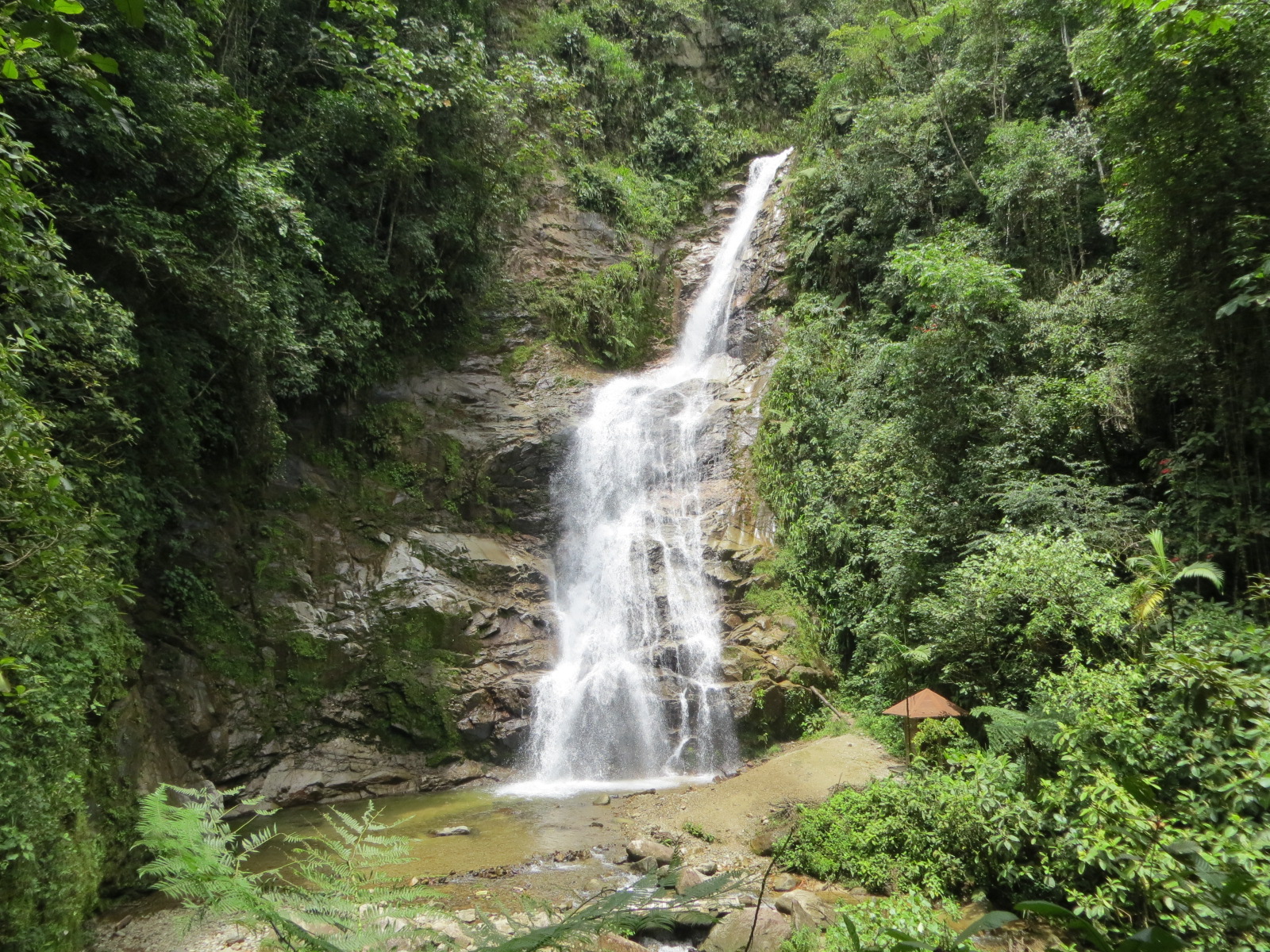
We decided to go to the waterfall first, and while admiring the beauty of the place I received a nasty bee sting through my pants on my upper leg. Conveniently, there is a changing room nearby (it appears people like to go swimming in the pool under the waterfall), so I went in, dropped my pants and applied some hydrocortisone cream from my first aid kit, covered it with a bandage, and we continued onward to our second destination in the park: the Mirador (lookout).
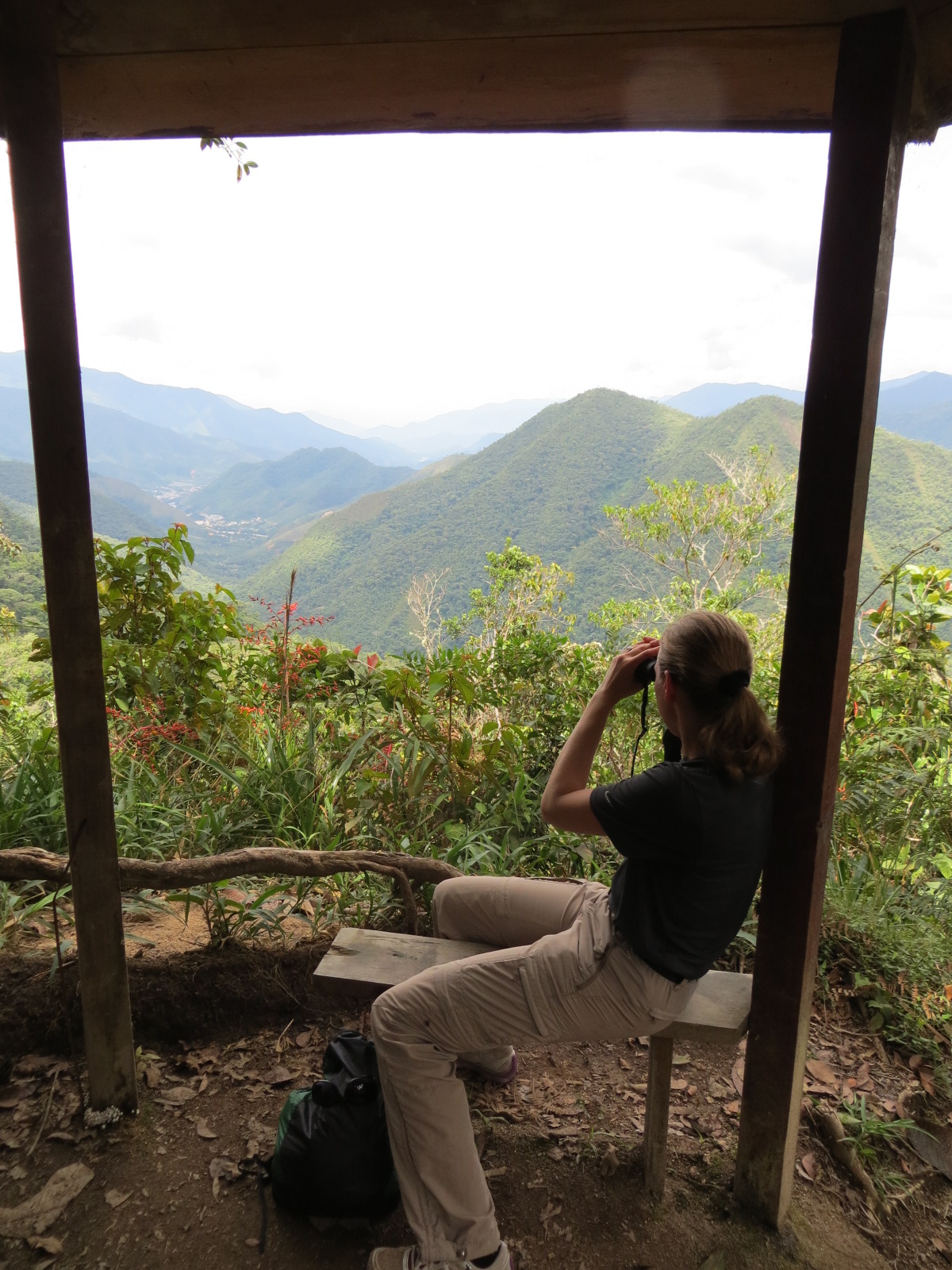
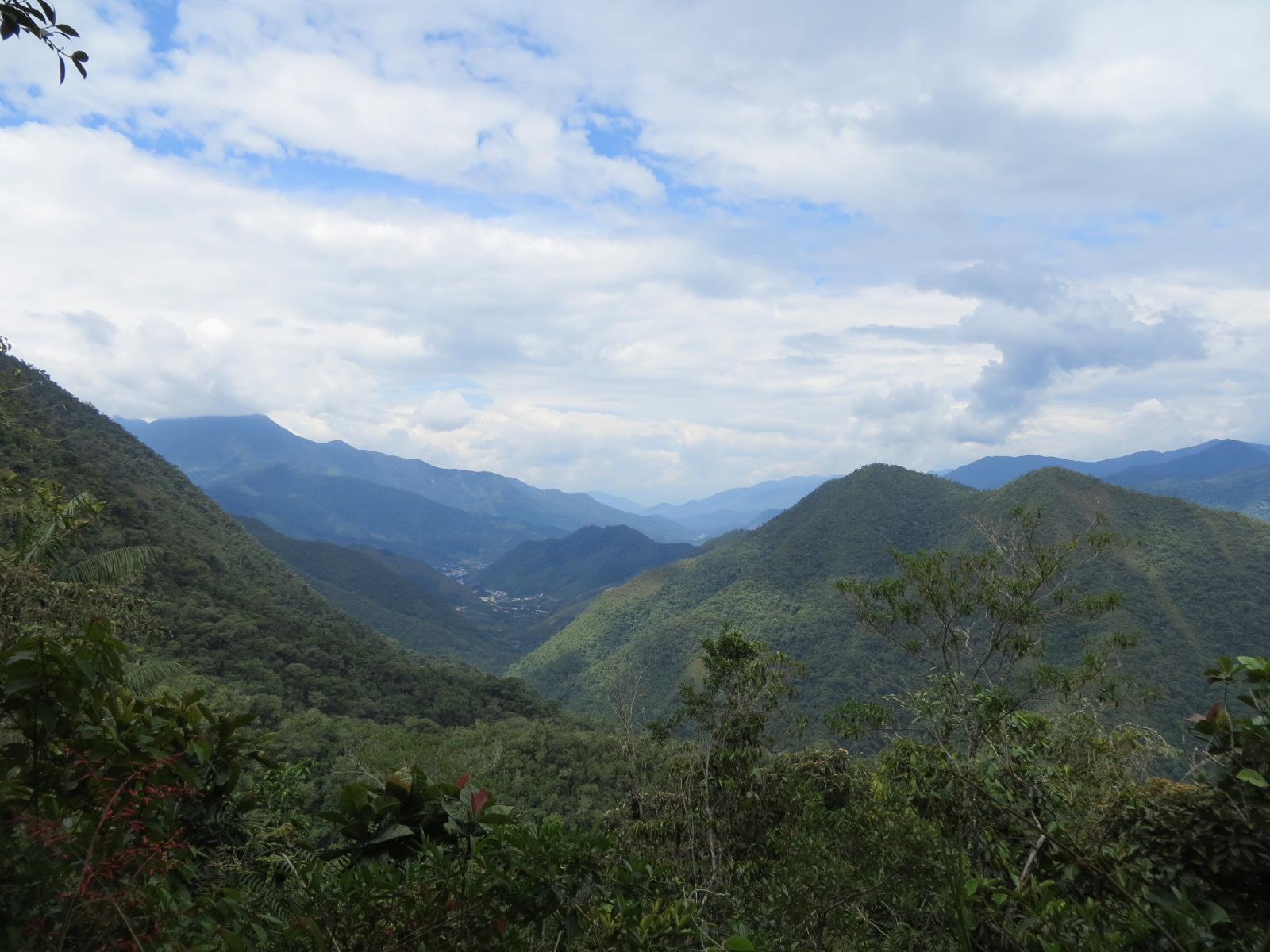
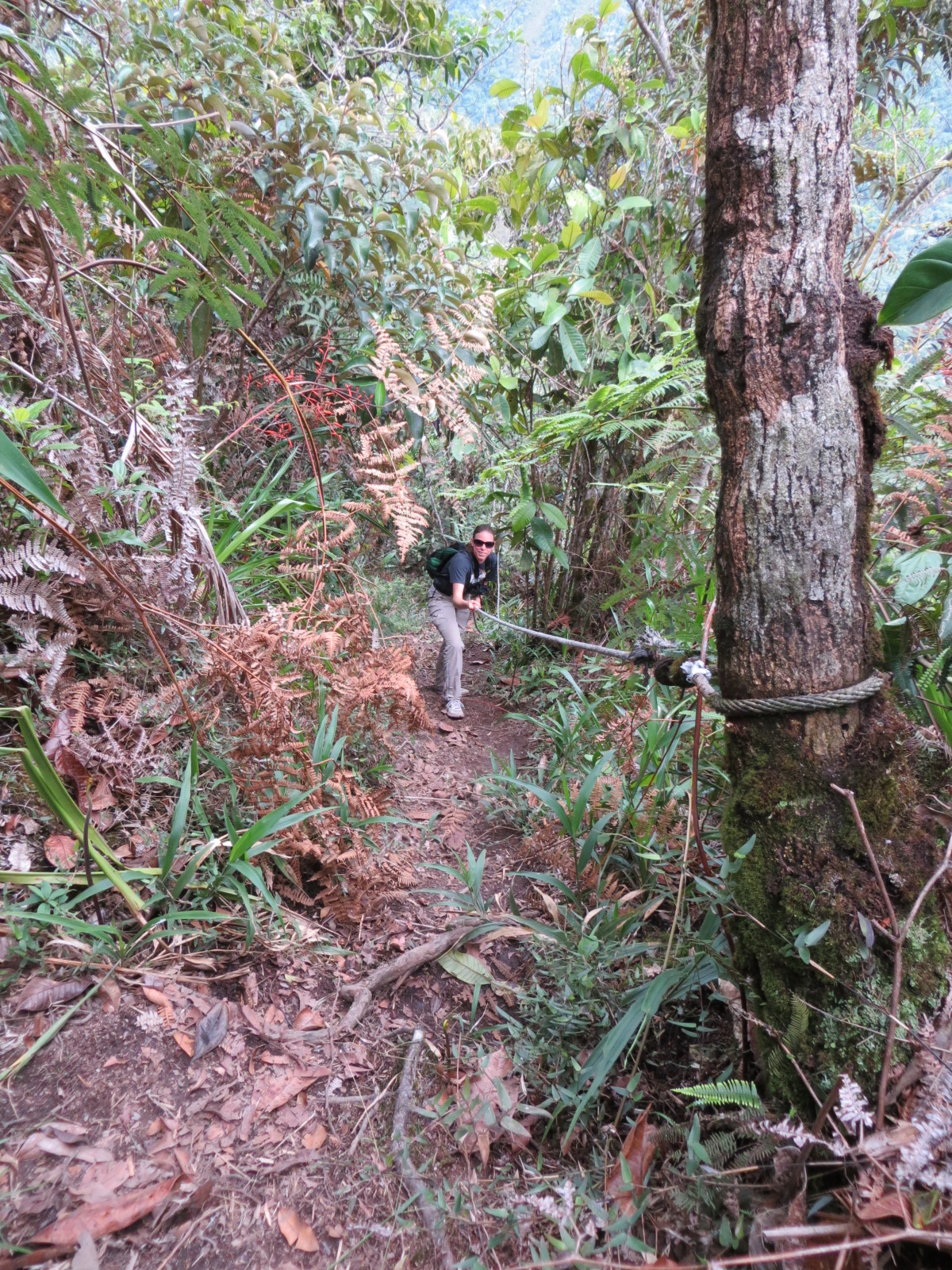 Between the heat, humidity, and insanely steep trail, we arrived at the top drenched in sweat, but rewarded with amazing views of Podocarpus and the Zamora valley. We pulled out our lunch and had our picnic there, then descended for our last stop: the swimming hole in the river.
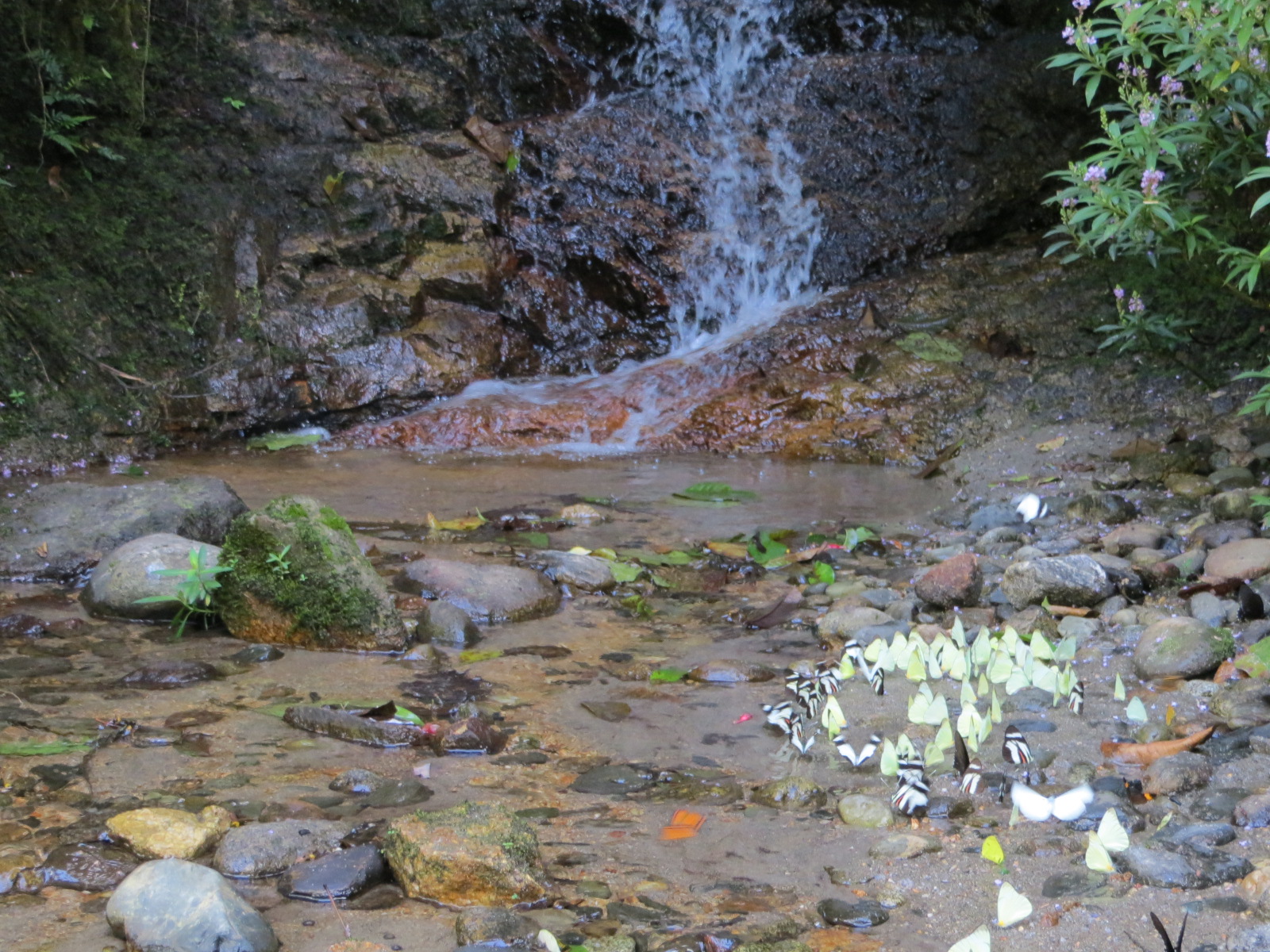
We didn’t have enough time to swim before hiking out to catch our ride, but we explored the shoreline and marveled at the beautiful flocks of butterflies collected there, so thick in some places that they looked almost like a carpet on the ground!
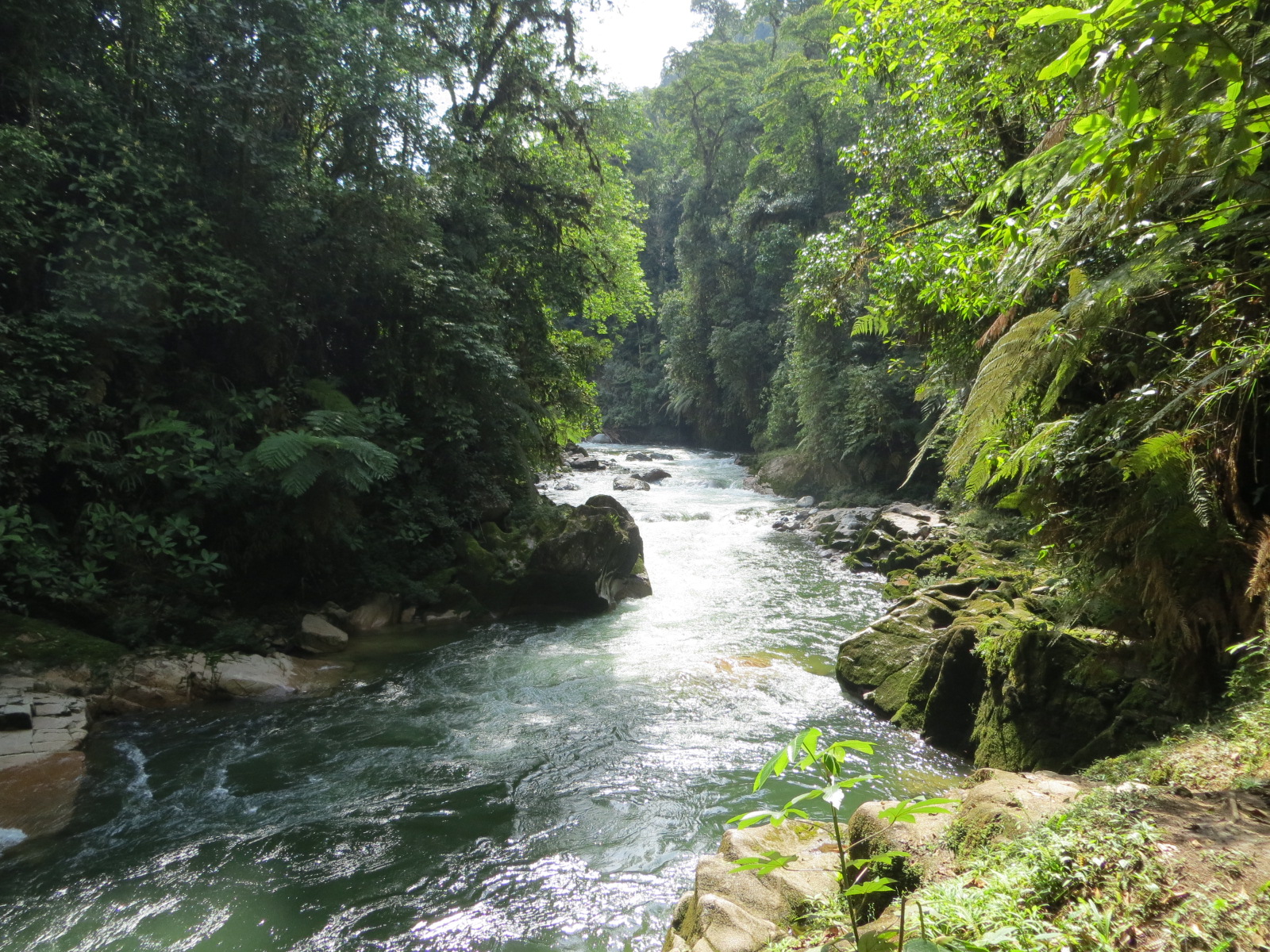
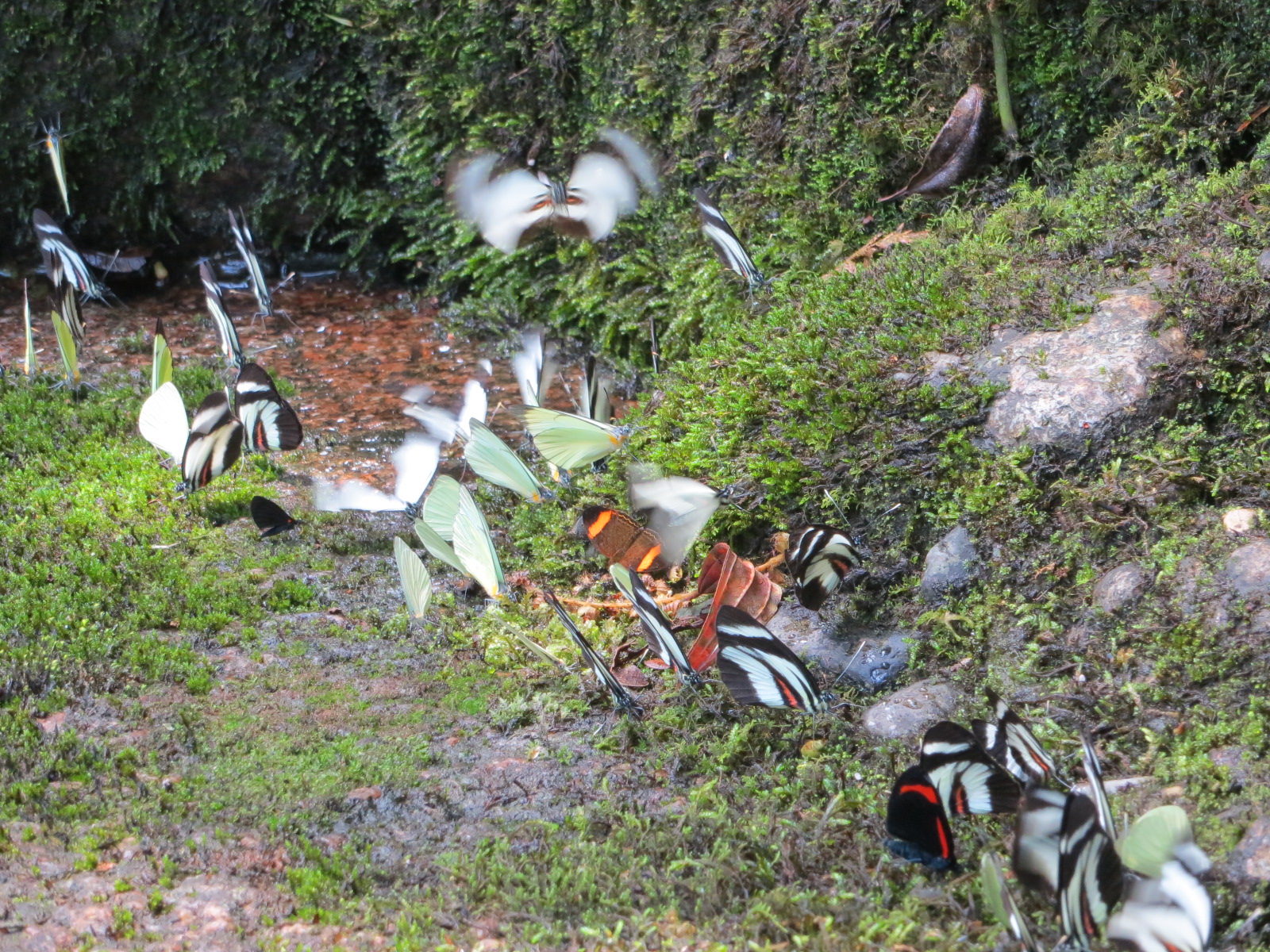
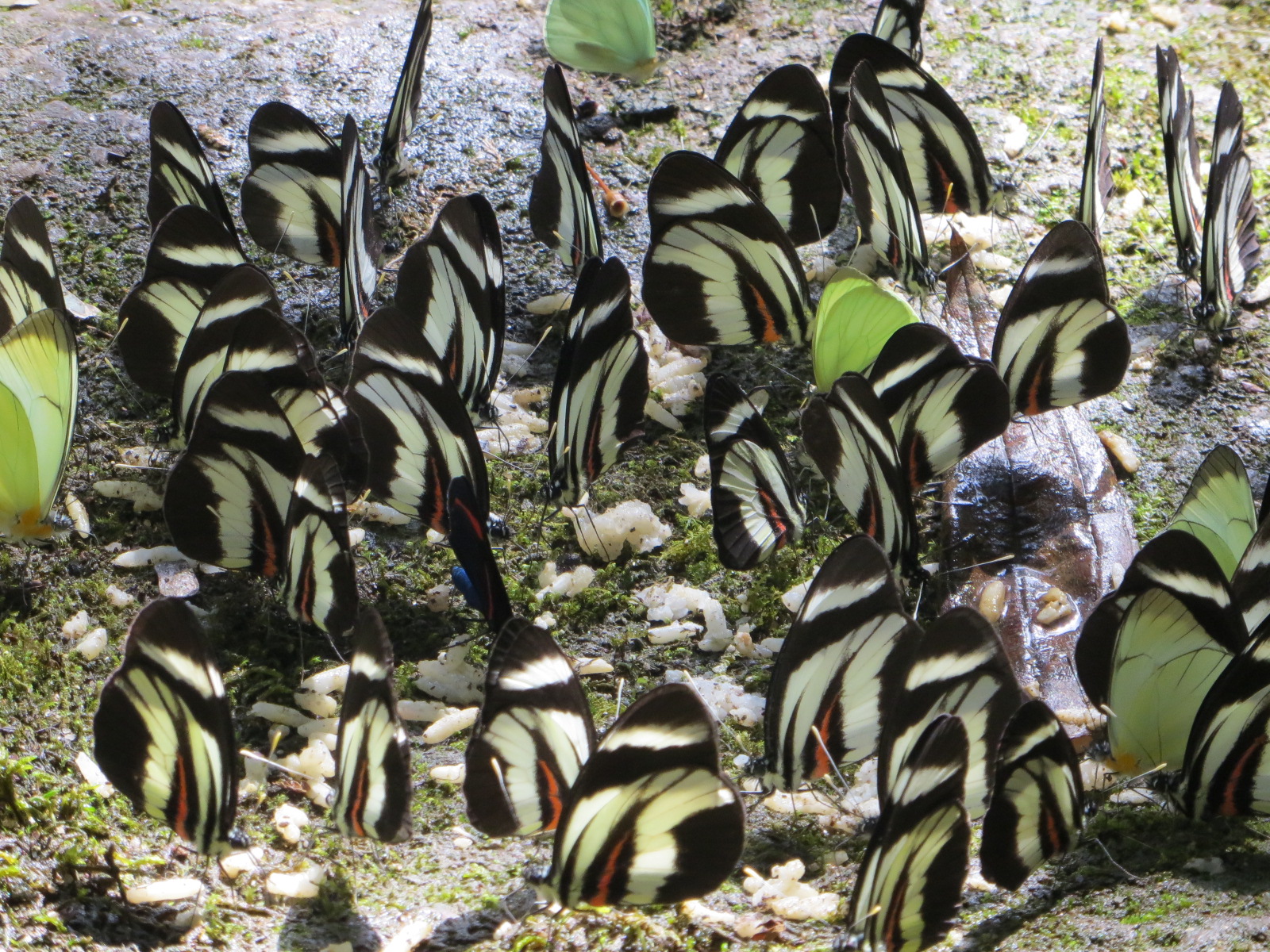
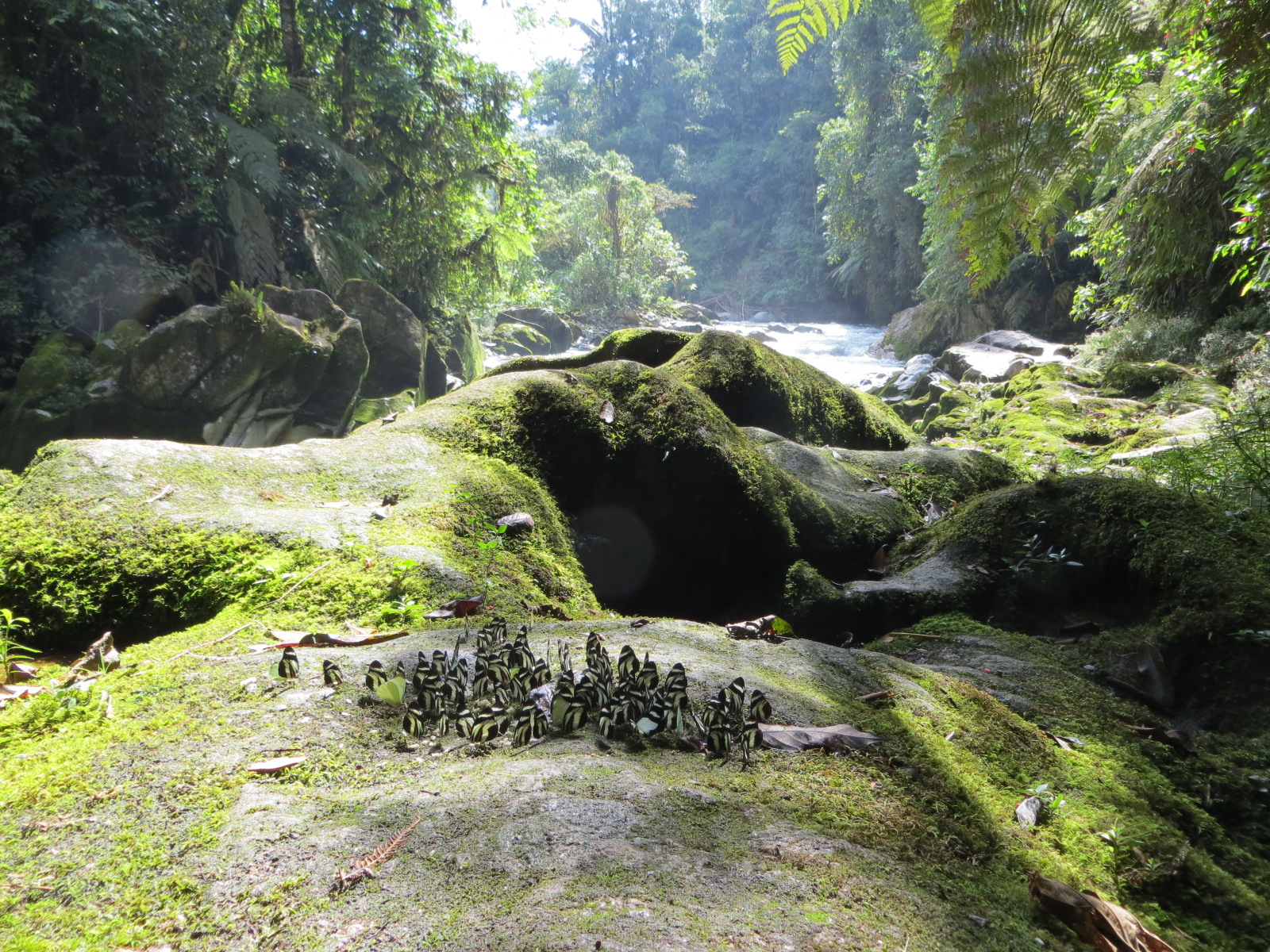
Our new friend met us as promised, and offered to show us the place where they were staying; an Eco-Lodge called Copalinga. We discovered that the birdwatching couple we had met the previous day were also staying there, and that the lodge is a popular destination for birders. The dining area is set next to a bird feeding area, so that guests can watch the many species of birds as they eat breakfast each morning. Over 220 species of birds have been observed on the Eco-Lodge property.
We met the owners– Boudewijn and Catherine from Belgium–and Boudewijn told us all about his very impressive project: a hydropower plant that he built himself and that produces all the power at the Eco-Lodge. With alternative energy to match Keith’s interests and birdwatching to match mine, plus the ability to cater to our vegetarian diet (or pretty much any other diet, upon request), we definitely plan to splurge for a night at Copalinga sometime.
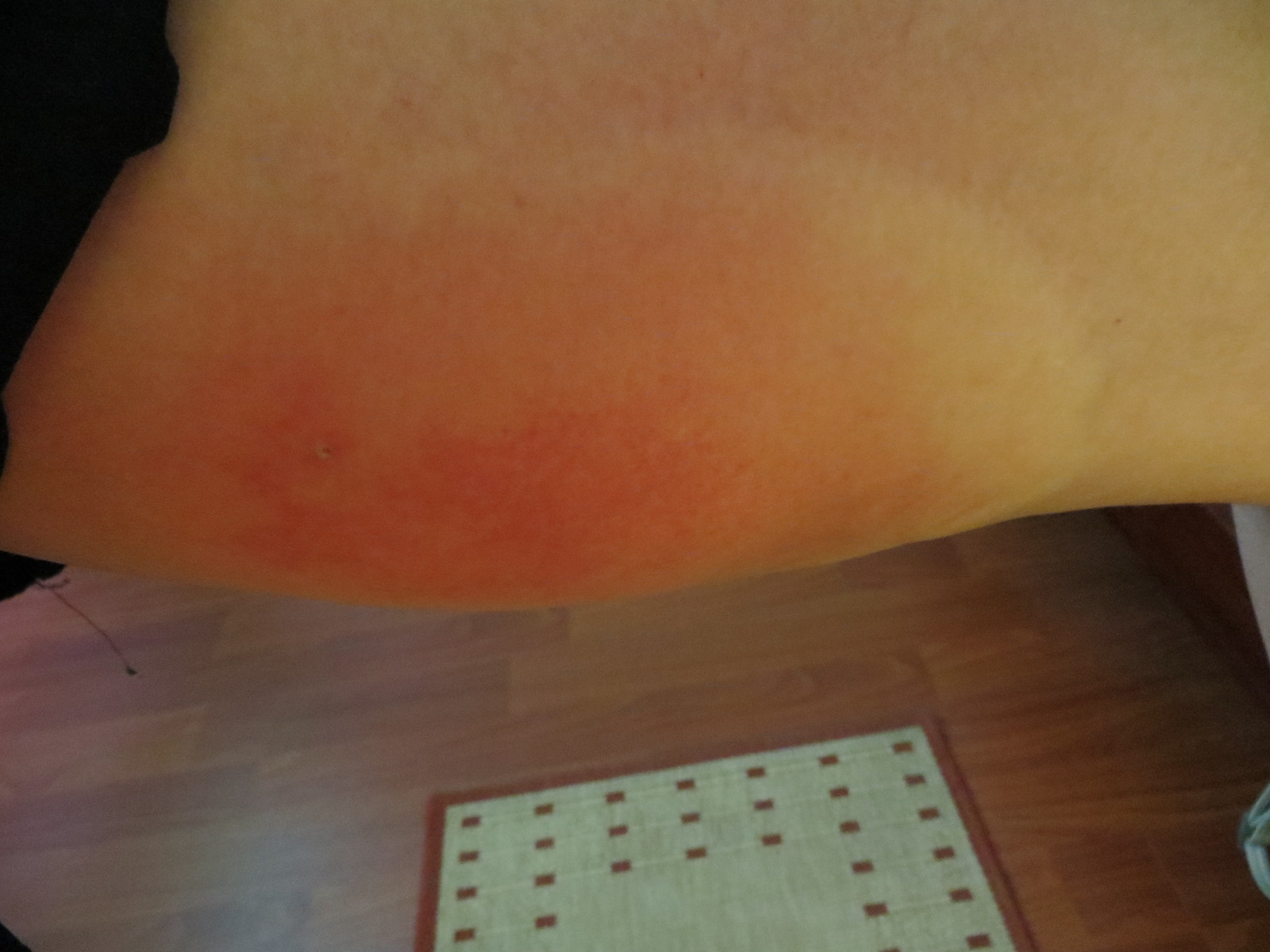
We wished we could stay longer, but with the day coming to a close we needed to go catch a bus, so our new friend/driver took us back to town and we caught a bus to Loja a few minutes later. My bee sting remained as an unwelcome souvenir, swelling to a red mass larger than my hand by the following morning. Luckily it never did anything more than itch like crazy, and after spending about $2.50 at the pharmacy I got the swelling and itching under control. I’ll go back to Zamora sometime, even if I do get stung again.
I’m Writing a Book About Loja!
Are you interested in learning more about Loja? Does Ecuador interest you as a place to travel or move to? Enter your email below to learn more about my book!
Enter your name and email to receive my newsletter and stay up to date!
We hate spam as much as you. Your email is safe with us.